
Oct
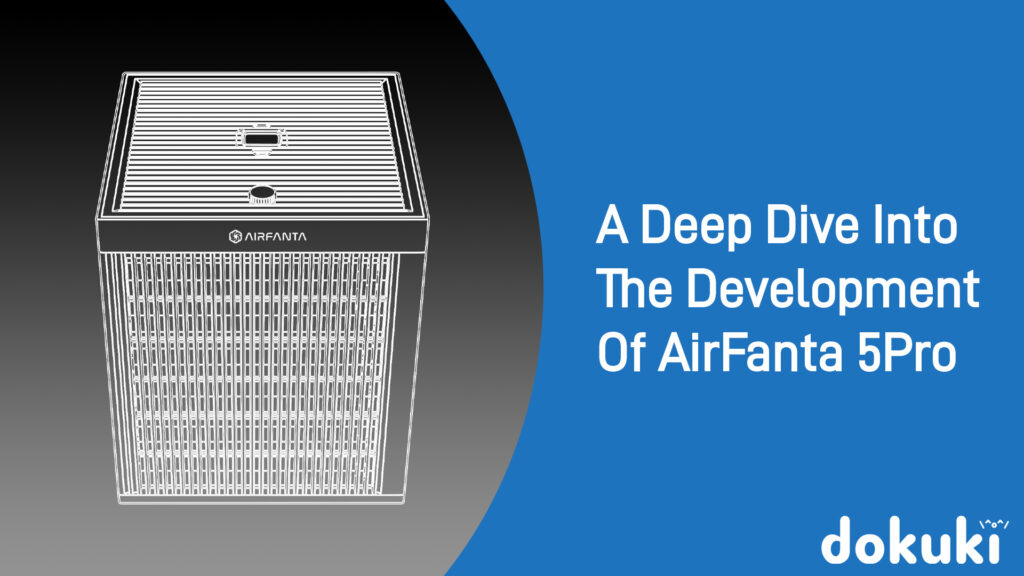
In this blog post, dokuki speaks with AirFanta founder and chief engineer Adam to get a deep dive into the development of AirFanta 5Pro, the all-new AI room air purifier out now in Singapore.
1. Please tell us when and how the development of AirFanta 5Pro started. What were some of the pain points users had with the AirFanta 3Pro that you wanted to address with the AirFanta 5Pro?
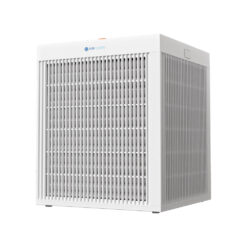
It was about two and a half years ago (March 2024). We collected feedback from the market about the shortcomings of the AirFanta 3Pro. The problems were mainly in a few areas. First, many people could not accept its appearance. Second, filter installation was somewhat difficult for some people. Third, the fan plate was assembled from four separate fans, so its overall structural strength was not sufficient. During shipping, it was easy for the bearings inside to get squeezed, causing abnormal noise/rattling. This issue was especially common in Western markets.
2. Usually, improving the appearance and aesthetic of an air purifier comes at the cost of lower air-cleaning performance. However, this issue was avoided, as the AirFanta 5Pro has a slightly higher Clean Air Delivery Rate (CADR) than the AirFanta 3Pro. Please tell us some of the things you did to achieve this.
We did a lot of work to optimize airflow resistance.
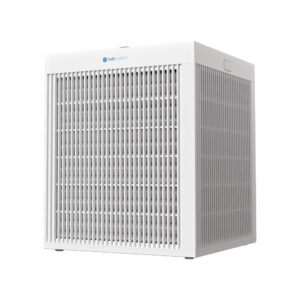
First, in terms of overall dimensions. We could not increase them by a large amount because we still wanted to keep the feature of fitting into a 20-inch suitcase after disassembly. After calculations, we increased the length and width by only 1 cm. Considering that the plastic housing takes up more than 1 cm, the filter width had to be reduced. But we increased the height by 7 cm. Since a suitcase is long, this did not affect fitting it into the suitcase.
As a result, the AirFanta 5Pro’s total filtration area is about 10% larger than the AirFanta 3Pro’s. However, considering that part of the AirFanta 3Pro’s filter is tucked against the edge of the filter on the other side and effectively cannot let air pass through, the AirFanta 5Pro’s effective filtration area is 120% that of the AirFanta 3Pro.
As you can see, on the AirFanta 3Pro, the filter blocks part of the fan edge, which causes some airflow loss. We improved this, and now the AirFanta 5Pro’s fans are not blocked by the filter.
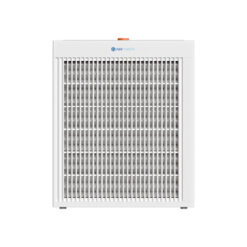
We also optimized the grille based on fluid dynamics to minimize turbulence and thereby reduce resistance. With all these measures, despite having an outer casing, the AirFanta 5Pro’s Clean Air Delivery Rate (CADR) is still very good.
Editor’s note: Clean Air Delivery Rate (CADR) refers to the air-cleaning performance of an air purifier. The AirFanta 5Pro’s CADR at top speed is 716 m³/h, and the AirFanta 3Pro is 702 m³/h.
3. Were there any features that you wanted to include in the AirFanta 3Pro, but only managed to do so with the AirFanta 5Pro?
Because it has a circuit board, screen, and PM2.5 sensor, we could achieve something that was not possible on the AirFanta 3Pro: automatically adjusting the fan speed based on PM2.5 readings. This feature works quite well in China, because some people smoke in public places. Once someone starts smoking, the air purifier immediately runs at full speed.
4. What were some of the things that you struggled with during the development of AirFanta 5Pro, and how did you overcome these challenges?
First, in the home appliance market, very few appliances use TFT screens; most use seven-segment displays. So writing a driver for a TFT screen was still very difficult, and few people have experience with it. Fortunately, I found someone with no experience but who was willing to work hard and learn. In the end, it took six months to finish the driver.
The second challenge was how to push the CADR as high as possible. This required a lot of calculation, simulation, and testing. It took a great deal of time and money.
5. The US-Iran conflict, as well as the AI semiconductor boom, have driven up prices and caused supply chain issues over the course of the year. Have these issues affected the production of AirFanta 5Pro, and if so, how did you overcome these challenges?
The supplier prices we had previously negotiated were no longer valid by the time of final production. We had no choice but to accept the latest prices. There was even a chip shortage, and we had to buy a batch of chips from the spot market at a high price.
6. The AirFanta 5Pro is equipped with a screen that displays the speed setting and PM2.5 level, making this the first room air purifier in AirFanta’s lineup to have a screen. What was the decision behind including the screen?
We had received quite a lot of feedback. Users even doubted whether the AirFanta 3Pro actually worked. Because there was no PM2.5 sensor and screen to read PM2.5, it was understandable that users had such doubts. So we decided that the AirFanta 5Pro must have a screen and a sensor, so that people could intuitively see whether it really works.
7. AirFanta 5Pro includes an AI PM2.5 Sensor that measures the PM2.5 level in the room. The accuracy of the AI PM2.5 Sensor is relatively high on the AirFanta 5Pro, compared to other air purifiers in the market. How was this achieved?
This sensor is a proven model. We previously used it on the AirFanta G2, and the feedback was very good. So we continued to use this sensor.
Editor’s note: The AirFanta G2 was a portable air quality monitor released in 2024 and has been discontinued. While the AirFanta G2 was never officially released in Singapore, its successor, the AirFanta G3, will be officially released in Singapore in the future.
8. In Singapore, formaldehyde has been a huge concern after renovating a house or business due to formaldehyde emissions from house paint and furniture. The Formaldehyde Killer filters released together with the AirFanta 5Pro could help address this issue with its exceptional ability to remove formaldehyde. How does the filter work in removing formaldehyde compared to say, the traditional High Efficiency + Activated Carbon filter?
In China, formaldehyde is also a huge concern. However, in the Chinese market, formaldehyde removal by filters is already a very mature technology. This time, we worked with a larger filter factory, and after some fine tuning, we achieved a fairly high formaldehyde CADR. The filter is impregnated with a catalyst. When formaldehyde molecules pass through the filter, they are catalytic-ally decomposed.
Editor’s note: The Formaldehyde Killer + High Efficiency + Activated Carbon filter for AirFanta 5Pro has a Formaldehyde CADR of 505 m³/h.
9. Were there any features that you wanted to include in the AirFanta 5Pro, but you decided to scrap them?
We wanted to make an app with richer features, such as remote control, timers, and checking filter life. But because time was limited and I myself am not a software engineer, this feature was abandoned. In fact, an air purifier just needs to be left running all the time; an app is not really necessary.
10. Before we end this Q&A session, do you have anything else you want to share with AirFanta fans in Singapore?
On behalf of AirFanta, we greatly thank you for your support. Without your support, it wouldn’t have been possible to develop and release AirFanta 5Pro. We hope AirFanta 5Pro will help you improve your indoor air quality.
Get your AirFanta 5Pro today
AirFanta 5Pro is now available for purchase on dokuki.com. Click below to buy now.
Room Air Purifier
