
AirFanta 5Pro Replacement Filters
S$84.00
Note: The replacement filters in this product listing are only compatible with AirFanta 5Pro.
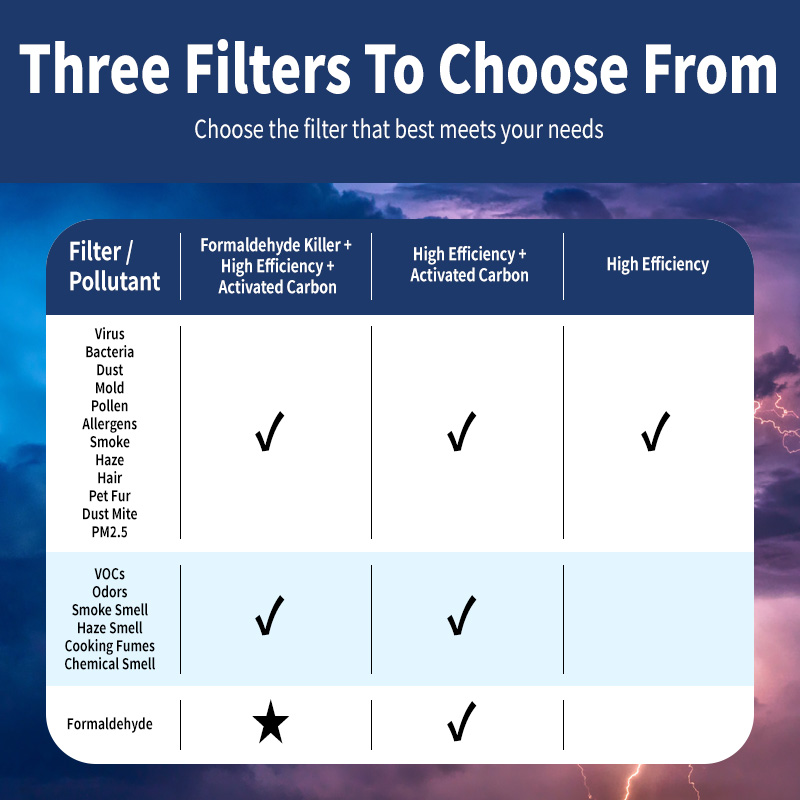
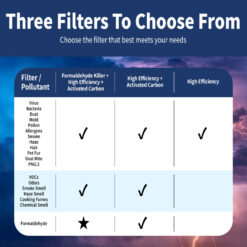
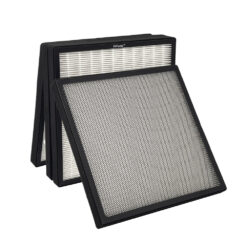
Official replacement filters for the AirFanta 5Pro come in High Efficiency, High Efficiency + Activated Carbon, and Formaldehyde Killer + High Efficiency + Activated Carbon options.
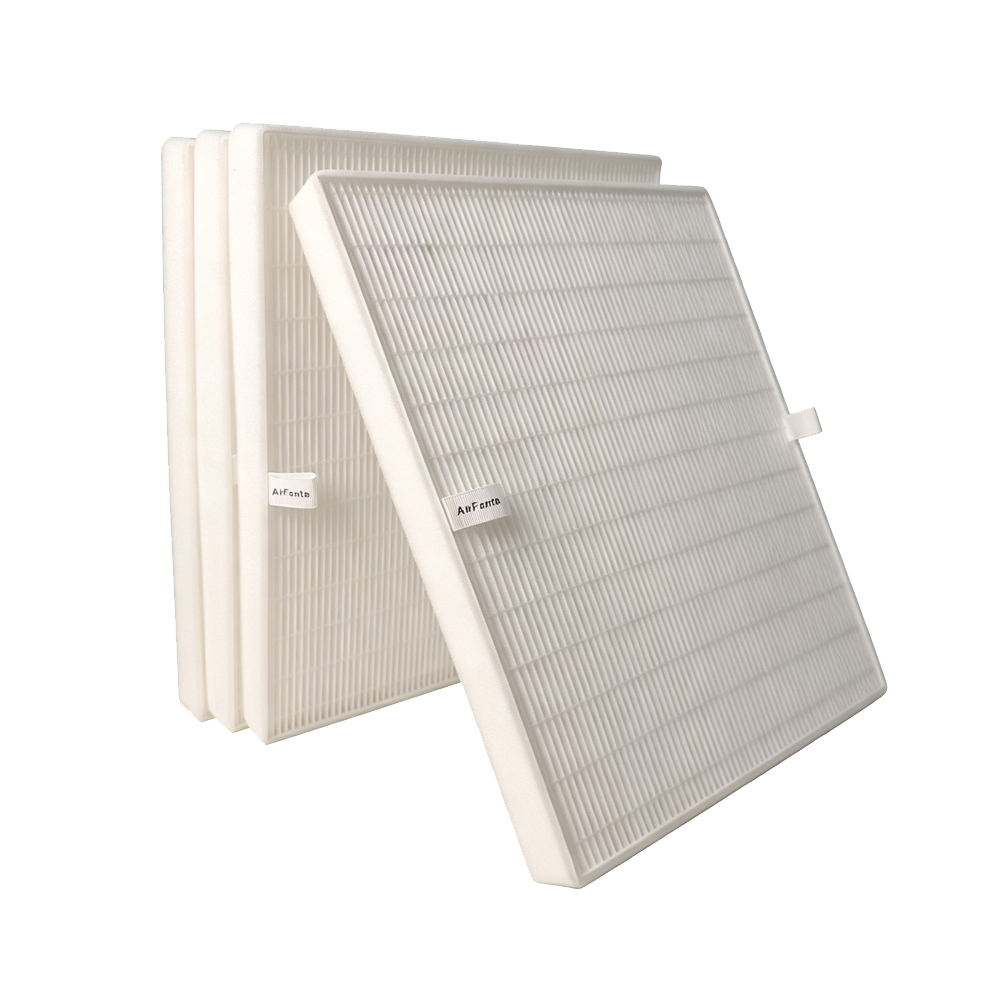
One set contains four replacement filters. Replace all four filters of your air purifier at the same time.
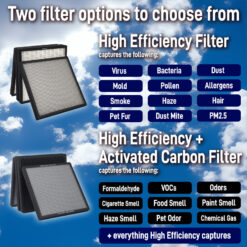
The High Efficiency filters capture pollutants such as viruses, dust, mold, allergens, haze, pollen, and pet dander.
The High Efficiency + Activated Carbon filters remove chemical and gaseous pollutants such as formaldehyde, VOCs, smells, odors, and pollutants that the High Efficiency filter captures.
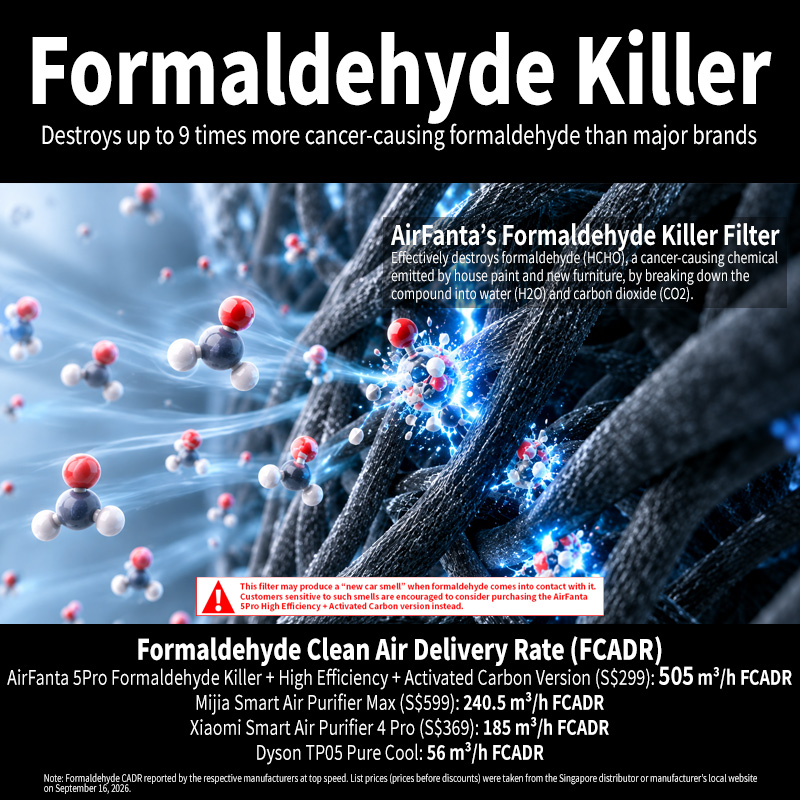
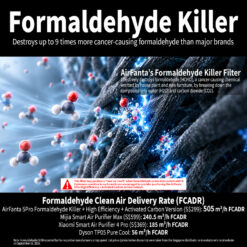
The Formaldehyde Killer + High Efficiency + Activated Carbon filters contain a special layer of coating 20 times more effective at removing formaldehyde, a cancerous gas, and are able to capture VOCs, smells, and pollutants that the High Efficiency + Activated Carbon filters handle. NOTE: Please check this page before purchasing Formaldehyde Killer filters.
- Filtration Efficiency at 0.3 microns (single pass): 95%+
- Total Activated Carbon content: 600,000 mg (150,000 mg per filter) for High Efficiency + Activated Carbon version / 450,000 mg (112,500 mg per filter) for Formaldehyde Killer + High Efficiency + Actiavted Carbon version
- Weight: –
- Dimensions (per filter): – cm
- Release date: October 1, 2026
- High Efficiency filters x4 (for High Efficiency option), High Efficiency + Activated Carbon filters x4 (for High Efficiency + Activated Carbon option), or Formaldehyde Killer + High Efficiency + Activated Carbon filters x4 (for Formaldehyde Killer + High Efficiency + Activated Carbon option) per set
- Recommended High Efficiency Filter Replacement Frequency: Every 6 to 12 months
- Recommended High Efficiency + Activated Carbon Filter Replacement Frequency: Every 4 to 8 months
- Recommended Formaldehyde Killer + High Efficiency + Activated Carbon Filter Replacement Frequency: Every 3 to 6 months
- Subscribe or purchase filter replacements here
FAQ
Yes. Testing from an independent laboratory showed that AirFanta 5Pro (standard: T/GDAR 0001-2020, test report: KJ2026001476E) removed over 99.99% of the H1N1 influenza virus.
As for SARS-Cov2 (COVID-19), based on findings from multiple studies, there is strong evidence that the virus resides in exhaled aerosols in the 1 to 5 microns range. AirFanta’s filters can remove 99.4% to 100% of viral aerosols in this range.
Our findings from both H1N1 and SARS-Cov2 (COVID-19) should also apply to other kinds of airborne viruses as well, as the size of viral aerosols exhaled from an infectious person doesn’t change much regardless of the type of virus.
Yes.
The High Efficiency filters can capture harmful particles from haze and wildfire smoke, however they cannot capture harmful VOCs (volatile organic compounds) that may reside in them, and they cannot remove the haze or wildfire smell. In addition, the filters may have to be replaced sooner compared to High Efficiency + Activated Carbon filters, which are more efficient at capturing denser haze particles.
If you need filters that capture VOCs, remove smells, and last longer during haze season, you should go for the High Efficiency + Activated Carbon filter option or the Formaldehyde Killer + High Efficiency + Activated Carbon filter option.
Yes, but there are two things to note.
First, the only types of filter that can remove formaldehyde are the Formaldehyde Killer + High Efficiency + Activated Carbon filters and the High Efficiency + Activated Carbon filters.
The main difference between both filters is that the Formaldehyde Killer filters come with a special coating that is highly effective at breaking down formaldehyde into water and carbon dioxide. The Formaldehyde Clean Air Delivery Rate (FCADR) for the Formaldehyde Killer filters at top speed is 505 m³/h. In other words, the filters can absorb up to 505 m³ of formaldehyde in the air per hour at top speed.
The High Efficiency + Activated Carbon filters rely on activated carbon to remove formaldehyde. While activated carbon is much more effective at removing odors and other types of VOCs (volatile organic compounds), it is not very effective at removing formaldehyde. As a result, the Formaldehyde Killer filters can remove about 20 times more formaldehyde than the High Efficiency + Activated Carbon filters.
However, one point that should be taken note for the Formaldehyde Killer filter is that it may produce a “new car smell” when formaldehyde comes into contact with it, and that it may be more noticeable at higher speed settings or in spaces with high humidity. While it isn’t a particularly strong or unpleasant smell, we encourage customers that are sensitive to such smells to consider purchasing the High Efficiency + Activated Carbon version instead.
Second, it is important to note that regardless of the type of filter that is purchased, there is a limit to how much formaldehyde is absorbed or captured by the filters. If you are planning to use the AirFanta 5Pro to minimize the amount of formaldehyde in the air after major renovation work, we encourage you to use it together with other measures such as natural ventilation. Also, we encourage you to monitor the amount of formaldehyde in the air with a reliable air quality monitor (sold separately) such as AirFanta G3 (coming soon) that can measure HCHO (the chemical compound for formaldehyde) before and after renovation, before and after using the AirFanta 5Pro, and in the months after you’ve started using the AirFanta 5Pro.
If the amount of formaldehyde reaches an unhealthy level some time after using the AirFanta 5Pro (compared to just after you’ve started using it), it indicates that the Formaldehyde Killer filter has reached its limits for absorbing formaldehyde and should be replaced immediately to continue removing formaldehyde from the space.
The High Efficiency filters should be replaced every 6 to 12 months, the High Efficiency + Activated Carbon filters should be replaced every 4 to 8 months, and the Formaldehyde Killer + High Efficiency + Activated Carbon filters should be replaced every 3 to 6 months. When replacing filters, replace all four filters at the same time. One set of replacement filters comes with four filters.
The filter lifespan largely depends on environmental conditions. For example, you may need to replace it more often when using it under environmental conditions such as haze or wildfire smoke. Visually inspect the condition of the filter (if it looks completely black or appears to be choke full of dust, it should be replaced!) if you are unsure. Filtration efficiency and air cleaning performance will be reduced when the filters are dirty.
You can also use our Filter Lifespan Calculator to estimate the lifespan of your filters, but please take note that this calculator only takes into account particulate matter (such as dust, pollen, viruses, etc) filtered by the High Efficiency component of the filter.
That depends on what your needs are.
The High Efficiency filters are capable of filtering many different types of pollutants, such as viruses, dust, mold, pollen, allergens, smoke, haze, pet dander, and PM2.5.
The High Efficiency + Activated Carbon filters are capable of filtering everything that High Efficiency filters can capture, as well as pollutants such as formaldehyde (chemical associated with new paint smell), VOCs (volatile organic compounds, haze smell, cigaratte smell, cooking fumes, odors, and chemical gas.
The Formaldehyde Killer + High Efficiency + Activated Carbon filters are the same as the High Efficiency + Activated Carbon filters, except that they have a special coating designed to remove formaldehyde much more effectively than the other filters. This filter is recommended for customers concerned about formaldehyde after major renovation work. Please note that a “new car smell” may be produced when formaldehyde comes into contact with this filter, so if you are sensitive to such smells, we recommend getting the High Efficiency + Activated Carbon filters instead.
Generally speaking, the High Efficiency filters are sufficient for most use cases, but if you are trying to reduce a smell or odor, you should go for the High Efficiency + Activated Carbon option, or the Formaldehyde Killer + High Efficiency + Activated Carbon option if you are moving in to a newly-renovated home or business or wish to get the best protection.
Also, keep in mind that you can purchase the three types of filter replacements and switch between them anytime.
AirFanta 5Pro is only compatible with AirFanta 5Pro replacement filters, and is not compatible with AirFanta 3Pro replacement filters. Please double check and ensure that you are purchasing the correct replacement filters.
AirFanta’s High Efficiency filter was designed to deliver 10 to 20% more clean air (air cleaning performance / Clean Air Delivery Rate), lower energy consumption, and lower noise levels than HEPA filters from other brands.
HEPA filters from other brands have higher pressure drop that makes it harder for air to flow through the filter, resulting in less clean air, higher energy consumption, and higher noise levels.
For more information, please read our post here.
The AirFanta 5Pro does not come with a pre-filter as it is designed to be maintenance-free.
| Filter Type | High Efficiency, High Efficiency + Activated Carbon, Formaldehyde Killer + High Efficiency + Activated Carbon |
|---|---|
| Sets | 1 set, 3 sets (save 3%), 6 sets (save 5%) |
Only logged in customers who have purchased this product may leave a review.
Related products
Replacement Filter
Replacement Filter
Replacement Filter
Reviews
There are no reviews yet.