
Oct
The ongoing haze crisis in Singapore and Southeast Asia has led many to focus on outdoor pollution. But what about indoors? In this blog post, we take a look at the state of indoor spaces in Singapore, and find out whether the air indoors is cleaner than the air outdoors.
Real-time values were higher than NEA-reported values
To investigate, we brought a Temtop air quality monitor to measure the level of particulate matter (PM) in the air in different locations in the afternoon on October 8, 2026.
Around the time of measurements, the NEA’s Haze website reported that the hourly PM2.5 levels were around 60 ug/m³ to 70 ug/m³ in the western part of Singapore.
The level of PM2.5 on the Temtop was not double, but almost triple the reported hourly value by NEA, at 160 ug/m³ outdoors:
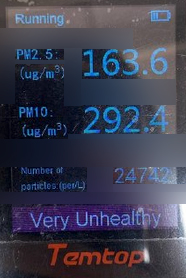
Could this have been a calibration error on a single device? Similar values were reported by a car’s built-in PM2.5 sensor, which could measure the level of particulate matter outside the car, with values ranging from 120 to 150 ug/m³.
We are not sure why there was a huge discrepancy between the values reported by NEA against other air quality sensors and monitors, but we believe that the large discrepancy could have been caused by NEA’s different way of calculating and measuring PM2.5.
The air indoors isn’t necessarily safe from the haze
We all know that the air is very unsafe outdoors, but what about indoors?
We measured the air quality in the building of the dokuki office. The PM2.5 levels were between 25 to 35 ug/m³, about 80% cleaner than the air outdoors:
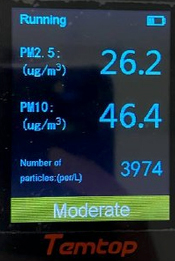
However, it’s worth noting that before the haze, the air quality in the same building was usually in the single digits (between 1 to 7 ug/m³). Keep in mind that according to WHO recommendations, your hourly exposure to PM2.5 should be no more than 5 ug/m³. Daily exposure to 25 to 35 ug/m³ of PM2.5 is equivalent to about the long-term health impact of smoking 1 to 1.5 cigarettes a day.
Air quality measurements taken inside the NEX shopping mall by a forum user on October 7, 2026 around noon also found that the PM2.5 level inside the mall was between 23 and 68 ug/m³, varying depending on floor and area, while the air outside was 100 ug/m³ to 120 ug/m³. Their findings align with ours.
This indicates that the air inside commercial buildings with mechanical ventilation and air conditioning aren’t 100% safe from the haze, especially when the outdoor air is very hazardous.
What about the dokuki office?
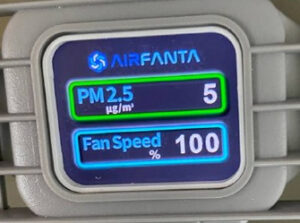
For comparison, we also took measurements inside the dokuki office, which had over 7 air changes per hour of clean air from AirFanta room air purifiers.
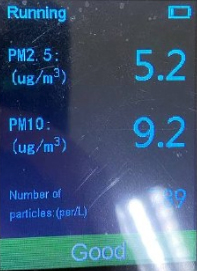
According to both the Temtop monitor and the AirFanta 5Pro’s AI PM2.5 Sensor, the PM2.5 concentration was around 5 to 5.2 ug/m³. That’s 80% to 86% cleaner than the rest of the building.
What about residential units like HDB flats and condominiums?
We asked the boss of dokuki for help in getting some data for private residences in Singapore.
How big is your house?
About 120 square meters.
How many air purifiers do you have?
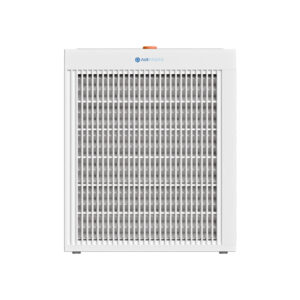
Currently, I have four AirFanta room air purifiers (two AirFanta 5Pro units and two AirFanta 3Pro units).
How do you use them on a regular basis?
All of the air purifiers run 24 hours a day, 7 days a week. Prior to the haze, all of the air purifiers ran at a minimum of 60% speed (for AirFanta 5Pro) or at speed setting 3 (for AirFanta 3Pro), with some rooms running at a higher setting. This means that the entire house roughly gets 6 air changes per hour of clean air.
How has the haze changed the way you use them?
Back in September, the haze wasn’t as bad as it is now (October 2026), so the AirFanta air purifiers were running mostly at 60% – 70% speed, or speed setting 3 to 4. However, I’ve found myself manually adjusting them to 80% to 100% speed when the haze gets really bad.
How do you tell that the haze is bad?
When I wake up in the morning and during different times of the day, I will check the PM2.5 level displayed on the AirFanta 5Pro. I consider anything in the low single digits (0 to 5 ug/m³) good, and anything higher than that bad. So, if I see a value like, say, 25 ug/m³ or even 10 ug/m³, that tells me that the haze is really bad.
With values like these, the hourly reported value from NEA would definitely be at least 70 ug/m³.
Have you tried turning off the air purifiers and measuring the PM2.5 levels inside the house?
Absolutely not, considering how dangerous it is to breathe in the haze. However, we’ve heard from customers that have tried AirFanta products for the first time. One told us that they tried using their AirFanta 5Pro briefly in their living room with the windows fully opened – the AI PM2.5 Sensor showed 120 ug/m³ at first, and it was reduced to 66 ug/m³ in a short span of time. Of course, with the windows closed, the PM2.5 fell significantly further. For the best results, ensure that the windows are closed and the air purifier is used at top speed.
When was the worst haze day you’ve experienced this year so far?
I believe it was in early October. I checked the PM2.5 level on an AirFanta 5Pro and it displayed 20 ug/m³. That specific unit was running at 70% speed, so I dialed it and the others up to 100% speed and the PM2.5 went down to single digits very quickly. With all the air purifiers at 100% speed, my house gets 9 air changes per hour of clean air. If I remember correctly, NEA reported that the PM2.5 went above 100 ug/m³ in the part of Singapore where I live.
What can we learn from these findings?
The most important takeaway from this is that we cannot automatically assume that the air indoors is safe from the haze. Commercial buildings, such as office buildings and shopping malls, have state-of-the-art ventilation and HVAC systems, but these systems, which primarily rely on MERV-13 filters for filtration and have other limitations, come under heavy stress when PM2.5 levels are high, resulting in PM2.5 levels that could go as high as 70 ug/m³, equivalent to the health impact of smoking 3 cigarettes a day.
The best way to mitigate against this is by deploying high performance air purifiers, such as AirFanta 5Pro or AirFanta 3Pro, in indoor spaces to reduce the amount of particulate matter in the air, and make sure that you’re getting at least 6 air changes per hour of clean air from your air purifiers for the best results.
Protect your health with AirFanta’s air purifiers
AirFanta Room Air Purifiers:
Room Air Purifier
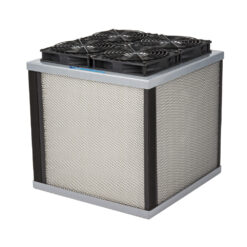
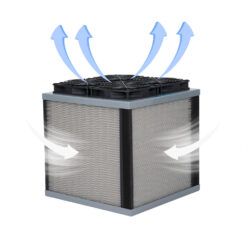
Room Air Purifier
AirFanta Laminar Air Purifiers:
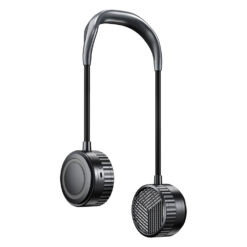
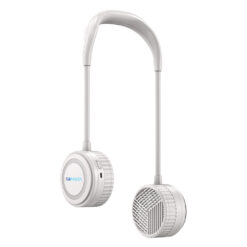
Laminar Air Purifier
Laminar Air Purifier
Laminar Air Purifier
